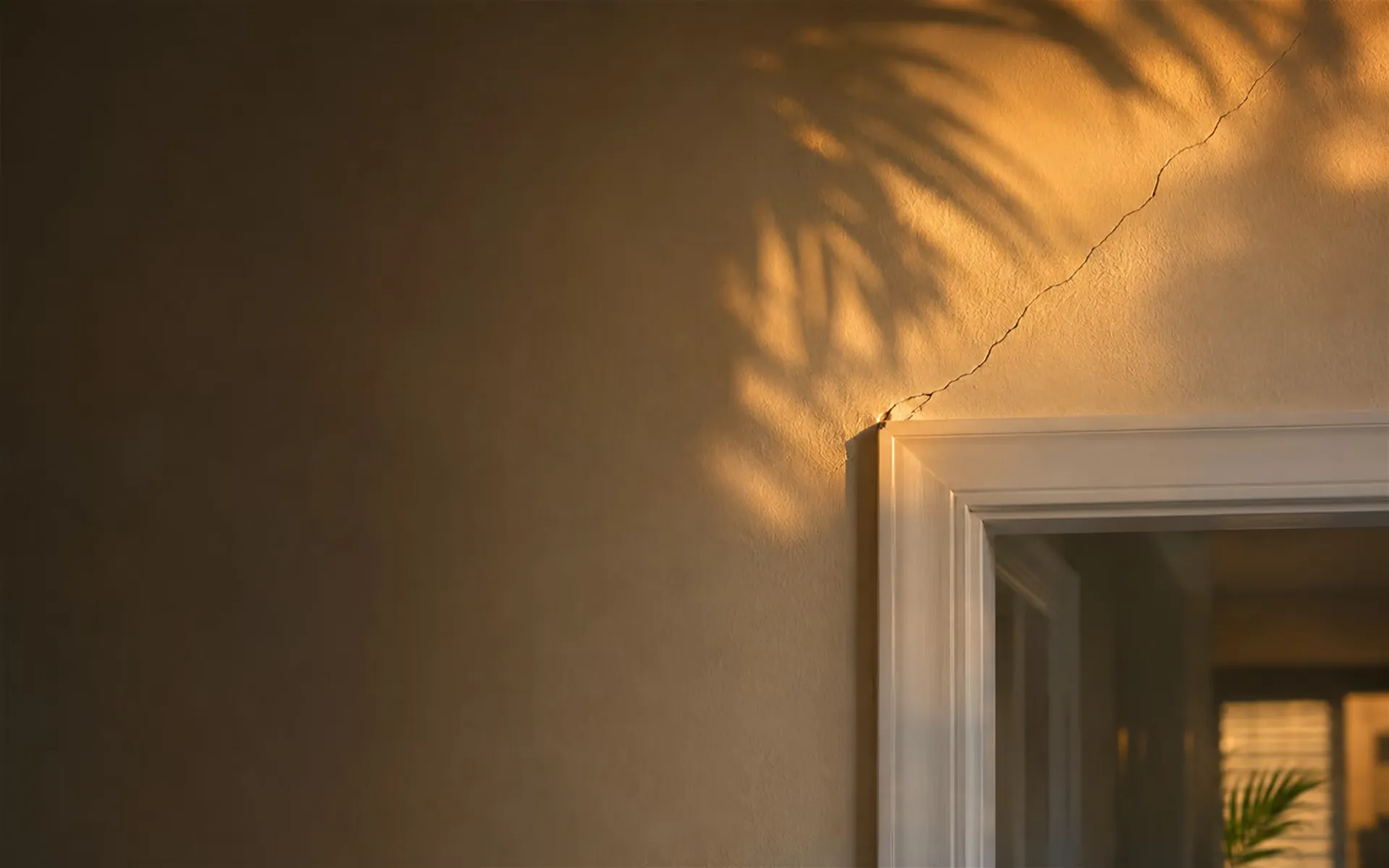
You notice it while drinking your morning coffee. A thin line runs up from the corner of the door frame, and you could swear it was not there last month. Then the questions start. Is the house settling? Is this a foundation problem? In Florida, is this how a sinkhole begins?
Almost always, the answer is much less dramatic. Drywall is a rigid, thin material attached to a house that is constantly moving a tiny amount with heat, humidity and the seasons. It cracks at its weakest points, and most of those cracks are cosmetic. But a small share of cracks do point to something that needs attention, and the size of the crack is not the best way to tell them apart.
Drywall repair is the service we are best known for at Junger Solutions, and the one we are called for most often around Orlando. So this guide covers what we actually look at when we walk up to a crack: its shape, where it is, how wide it is, what surrounds it and whether it is changing. By the end, you should be able to sort yours into "leave it," "fix it" or "call someone," with a clear idea of why.
Why drywall cracks in Florida homes
Central Florida homes share a few traits that explain most of the cracks we see. Understanding them makes the rest of this guide easier to follow.
- Normal settling. New homes settle slightly in their first years as framing dries and the structure takes on its load. Small cracks at door and window corners are common during that period.
- Humidity and temperature swings. Lumber, tape and drywall all react to moisture. Humid air outside, AC inside and a hot attic overhead mean the materials are always expanding and shrinking slightly, at different rates.
- Roof truss movement. In many homes, the roof trusses flex with temperature and moisture changes in the attic, sometimes lifting slightly from interior walls. It is called truss uplift, and it can open a gap where a wall meets the ceiling, which often appears and fades with the seasons.
- Block walls with furring. Exterior walls here are commonly concrete block, with drywall fastened over thin furring strips. Where that drywall meets wood-framed interior walls, two materials that move differently meet, and a crack often shows up.
- Water. Roof leaks after a storm, an overflowing AC drain pan in the attic and plumbing leaks all weaken drywall and tape from behind. Air handlers are often in attics and closets here, right above or beside finished ceilings.
- Installation quality. Tape that was not bedded in enough compound will eventually lift. Seams placed right at the corner of a door are also more likely to crack.
None of these causes is unusual, and most are not dangerous. The goal is to work out which one you are looking at.
How to read a drywall crack
This table sums up how we think about the most common patterns. Find the one closest to yours, then read the sections below for details.
| What it looks like | Likely cause | Concern | What to do |
|---|---|---|---|
| Hairline, straight line along a seam | Tape joint lifting or poorly bedded | Low | Repair when convenient |
| Short diagonal from a door or window corner | Normal settling and stress at the opening | Low | Mark it, then repair |
| Row of small round bumps or circles | Nail or screw pops | Low | Reset fasteners and patch |
| Web of very fine cracks | Compound applied too thick, or dried too fast | Low | Skim coat when repainting |
| Gap where a wall meets the ceiling | Truss uplift or seasonal movement | Low to medium | Watch through the seasons |
| Cracks returning in the same place after repair | Ongoing movement, or a weak earlier repair | Medium | Monitor, then repair with tape |
| Long crack across a ceiling, with sagging | Failed fasteners, moisture or a framing issue | Medium to high | Have it inspected soon |
| Any crack with a stain, soft spot or dampness | Active or past water leak | High | Find the leak first |
| Wider than about 1/4 inch, growing, or with sticking doors or sloping floors | Possible structural movement | High | Get a structural opinion |
Cracks that are usually cosmetic
Hairline cracks along seams
Drywall comes in sheets, and every joint between two sheets is covered with tape and joint compound. If a crack runs in a perfectly straight line, vertically or horizontally, it is probably following one of those joints. Tape that was not fully embedded eventually lets go. Sometimes the tape itself starts to bubble or lift, which you can see in raking light from a flashlight held flat against the wall.
Short diagonals from door and window corners
The corners of openings concentrate stress, and a little house movement finds them first. This is the classic settling crack: thin, angled, and usually running upward and outward from the top corner of a door or window. They are very common, particularly in a home's first few years. If the crack stays thin and the door still closes properly, it is typically cosmetic.
Nail pops and screw pops
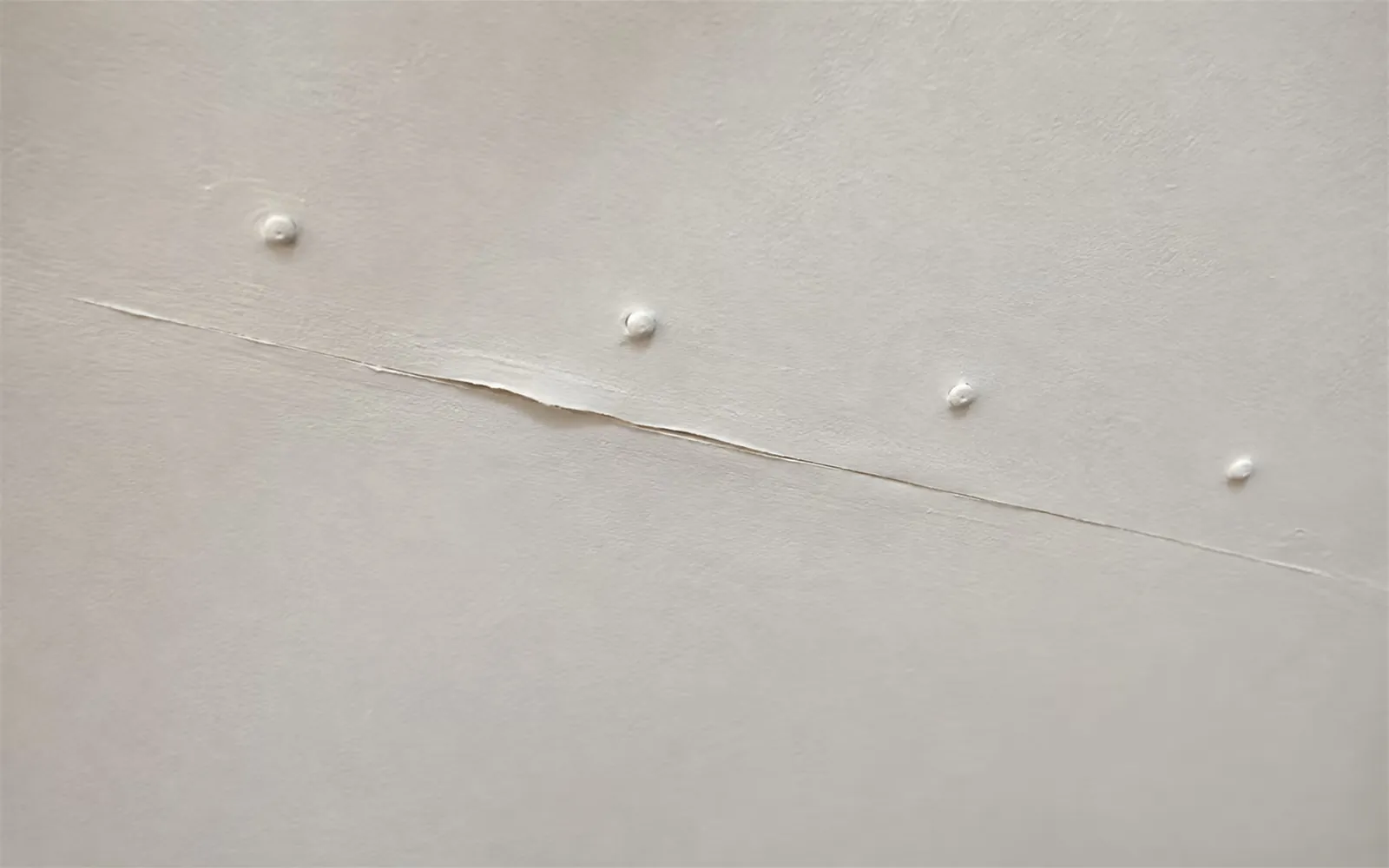
Those small round bumps or circular cracks, often in a row and spaced evenly, are fasteners working their way out as the framing shrinks and moves. They are not a structural concern. The fix is to secure the board with new screws just beside the old fastener, set or remove the popped one, and patch.
Fine, web-like cracks
A web of very fine cracks, sometimes called map cracking, usually means the compound or paint was applied too thick or dried too quickly. It is a surface problem, and it does not indicate that anything is moving behind the wall. A skim coat before the next paint job takes care of it.
Cracks worth watching
Gaps at the wall and ceiling joint
A crack that runs along the line where an interior wall meets the ceiling, particularly in the middle of a home, is often truss uplift. You may notice that it opens up at one time of year and nearly closes at another. It is alarming to look at, and it is usually harmless, because the roof structure is doing what it does as the attic heats and cools.
The challenge is repair. Re-taping it will often crack again in the same place, since the movement continues. A better approach is usually to allow for the movement: a crown or trim piece fastened only to the ceiling can cover the gap and move with it, or the joint can be reworked so that it can flex. If the crack appears together with a sagging ceiling or roof trouble, have it looked at rather than assuming it is uplift.
Cracks that keep coming back
A crack that reappears in the same place after repair tells you one of two things. Either the first repair was weak, typically just compound or caulk with no tape, or something is still moving there. Before repairing it again, mark it and watch it for a while, using the method below. If it stays the same, a proper taped repair should hold. If it keeps growing, find out why before you fix it again.
Long ceiling cracks
Ceilings carry their own weight, so a long crack across the middle of a room deserves more attention than the same crack on a wall. A crack with no sag is often a failed seam. If the ceiling dips, the board has pulled away from its fasteners or moisture has weakened it, and it can come down in larger pieces if it is left alone. Hold a long straightedge against the ceiling, or look along it with a flashlight, to see whether it is still flat.
When a crack is really a water problem
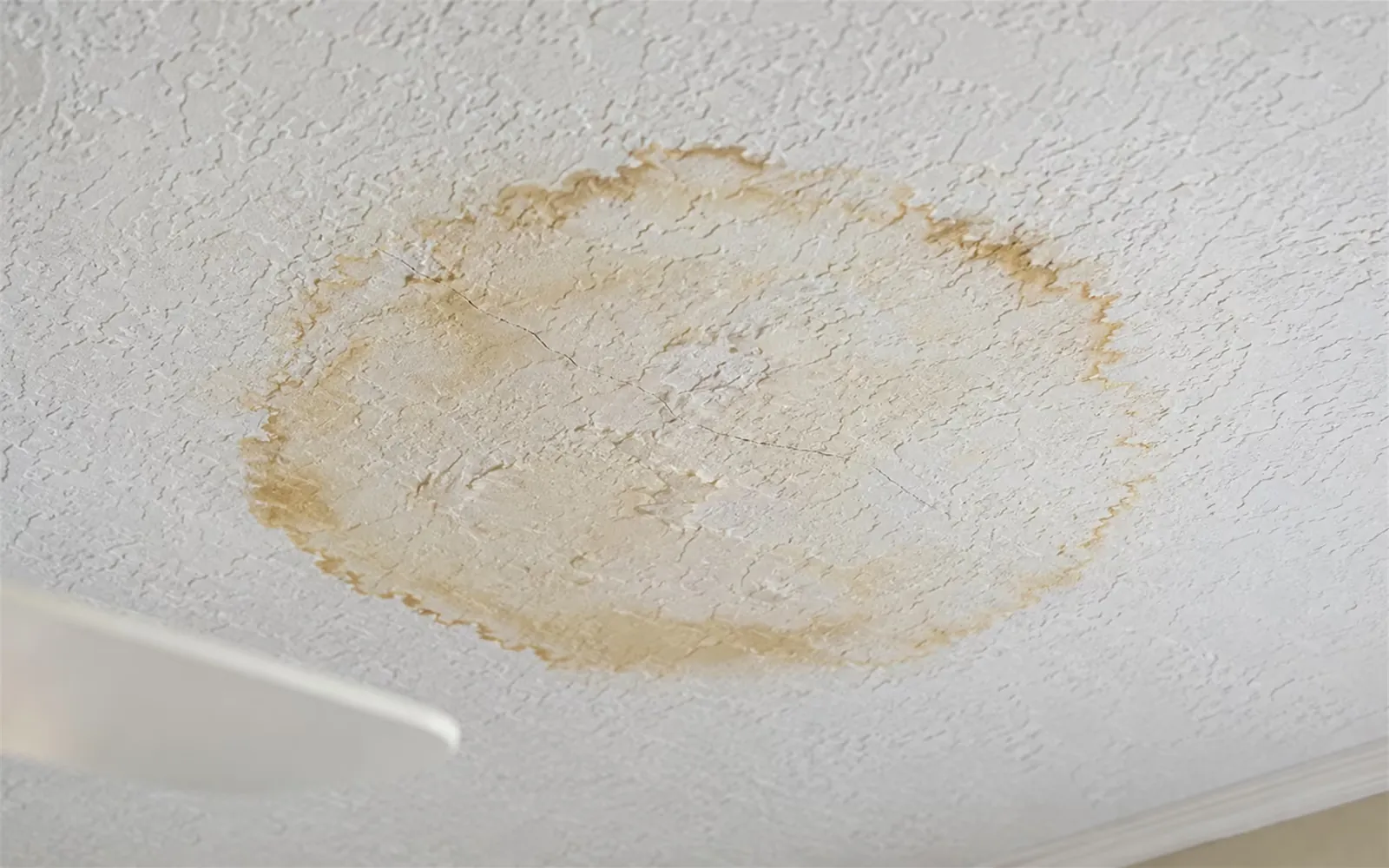
If you remember just one thing from this article, make it this: a stain matters more than the width of the crack. A hairline crack with a brown ring around it is more urgent than a wide, clean crack over a door.
Check for these signs of water:
- Yellow or brown staining, or rings with a darker outer edge
- Paint bubbling, peeling or looking swollen around the crack
- Drywall that feels soft or crumbles when you press it lightly
- A musty smell, or visible mold along the crack
- A crack that showed up right after a storm or an AC problem
In Central Florida, the usual suspects are roof leaks, particularly after storms, and AC systems. Air handlers in attics and closets produce a lot of condensate, and a clogged drain line can overflow a pan right into the ceiling below. Plumbing is the other common source, especially under a second-floor bathroom. If you see a ceiling stain under an air handler, check the drain line and the pan first, and turn the system off if the pan is full. Our AC service includes drain line cleaning, and our plumbing service handles leak repairs.
The order of repair matters. Fix the leak, confirm that the area is truly dry, remove the damaged drywall, then replace it and match the texture. Painting over a stain before the leak is fixed will only make it return, and closing up a wet ceiling can trap moisture and invite mold. The EPA's guide to mold and moisture recommends dealing with wet materials quickly, and notes that mold will likely come back if the water problem is not fixed.
Breno did an outstanding job repairing and painting large holes left from TV mounts. The results in both rooms were so flawless - you would never know the damage had ever been there! His attention to detail, professionalism, and skill were exceptional, and pricing was very reasonable. I highly recommend calling Breno for high quality drywall and painting services!
When to get a structural opinion
Real structural movement is much less common than people fear, but it should not be ignored. The crack in the drywall is rarely the problem. It is a symptom, and it usually comes with other symptoms. These are the ones to look for:
- Cracks wider than about 1/4 inch, or one side of the wall sitting noticeably forward of the other
- Cracks that are clearly growing from month to month
- Doors and windows that suddenly stick, or frames that have gone out of square
- Floors that slope or feel uneven in a way they did not before
- Matching cracks on the inside and outside of the same wall, such as in exterior stucco or block
- Stair-step cracks in block or brick
- Gaps opening between walls and the floor, or between walls and the ceiling, in several rooms at once
If you see several of these together, talk to a licensed structural engineer before anyone patches anything. A patch only hides the evidence the engineer needs. We repair drywall, and we are not structural engineers. If we walk up to a crack that looks like more than a surface issue, we will tell you that plainly and suggest you get that opinion first.
What about sinkholes?
Central Florida does have sinkhole activity, so it is reasonable to wonder. But a crack in the drywall, by itself, is very rarely a sign of a sinkhole. Warning signs tend to involve several things at once: cracks together with sloping floors, sticking doors, and changes outside, such as depressions in the yard, tilting fence posts or trees, or cracks in the driveway and foundation. The Florida Geological Survey has a useful sinkhole information page with answers to common questions and a helpline. If you see those signs, contact a professional and your insurance company rather than a drywall crew.
How to measure and monitor a crack
You do not need special tools to get useful information. A pencil, a ruler and your phone are enough.
A quick width test
Exact numbers matter less than knowing roughly which range you are in. Everyday objects give you a good sense of it:
| Test | Approximate width | What it usually means |
|---|---|---|
| A credit card will not go in | Hairline | Typically cosmetic |
| A credit card fits | About 1/32 inch | Typically cosmetic, keep an eye on it |
| A dime fits on edge | About 1/16 inch | Mark it and monitor it |
| A standard pencil almost fits | About 1/4 inch | Get a professional opinion |
Watch it for a few months
- Mark the ends. Draw a short pencil line across each end of the crack, and write the date beside it. You can erase it or paint over it later.
- Photograph it with a ruler in the shot. Use the same position and, if possible, the same light each time.
- Check monthly. Compare the crack against your marks and photos. Look for growth in length and width.
- Note what else changed. Record storms, AC issues, and any doors that started to stick.
- Keep going through the seasons. Our wet summers and drier winters can make some cracks open and close. A crack that moves slightly with the seasons is very different from one that keeps growing in one direction.
Those photos are valuable. They give an engineer, a repair crew or an insurance adjuster real information, rather than your memory of what the wall looked like in March.
How to repair a small crack yourself
A small, stable, cosmetic crack is a reasonable weekend project if you are comfortable with some mess. Most of the job is patience. Here is the method that holds up:
- Protect the area. Lay down drop cloths and close the door. Sanding dust goes everywhere.
- Open the crack. Use the corner of a utility knife to clean out loose material along the crack, and scrape away any lifted tape or flaking paint. It looks worse at this stage, and that is fine.
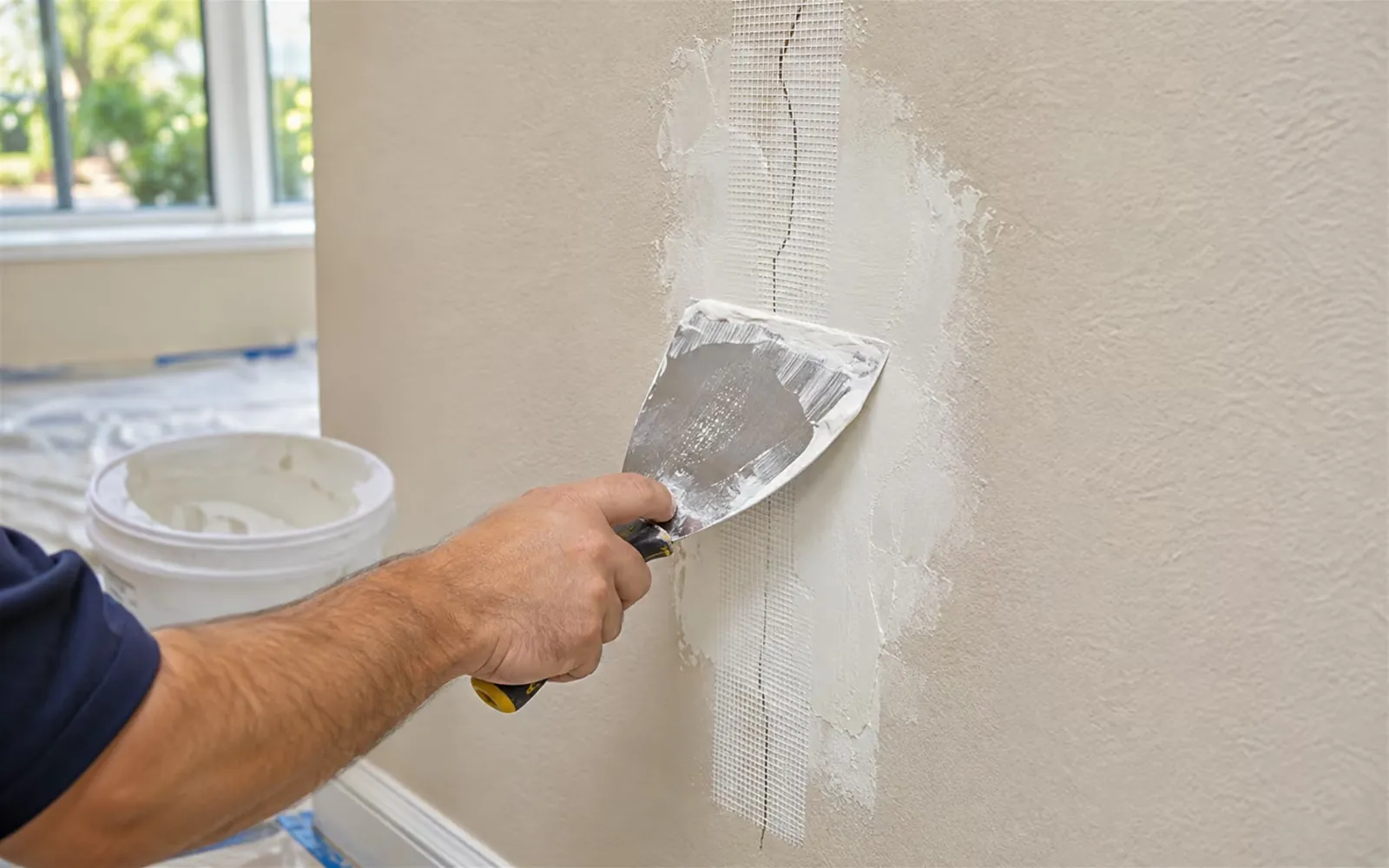
- Apply tape. Bed paper tape in a thin coat of compound, or use self-adhesive mesh tape over the crack. Skipping tape is the number one reason a repair cracks again.
- Apply thin coats. Spread a thin layer with a 6-inch knife and let it dry completely. Then apply a second and third coat with a wider knife, feathering each one a few inches further out. Several thin coats beat one thick coat every time.
- Sand lightly. Use a fine sanding sponge, and hold a light against the wall to reveal ridges. Wear a dust mask.
- Match the texture. This is the hard part. Orange peel and knockdown can be matched using a spray can of texture for small areas, but it takes practice, so try it on scrap board first. Smooth walls need extra finishing, as every flaw will show.
- Prime and paint. Prime the patch so it does not soak up paint and show through. Paint out to a natural break if you can, because even the same color can look different on a small patch.
What not to do
- Do not rely on caulk or spackle on its own. Filling the crack without tape usually just shows you the same crack again in a few months.
- Do not paint over a stain. Find the water source first. Stain-blocking primer is for after the leak is fixed.
- Do not patch a crack that is still growing. You will only have to do it again, and you may cover up useful evidence.
- Do not apply one thick coat. It shrinks and cracks as it dries, and it takes much longer to sand.
When to call a pro, and how we do it
Plenty of homeowners are happy to fix a small crack themselves. It tends to make sense to call someone when:
- The wall or ceiling is in a prominent spot where any imperfection will show, particularly in raking light from a big Florida window
- The texture is knockdown, orange peel or skip trowel, and you want the repair to disappear
- The crack is on a ceiling or high on a stairwell wall
- There are a lot of cracks, or the same ones keep returning
- There has been water damage
On a drywall repair visit, we start with the question this article is all about: why did it crack? Then we cut back the loose material, tape it properly and apply thin coats over two short visits, usually over 1 to 2 days, since joint compound needs to dry between coats. We identify the texture (knockdown, orange peel, skip trowel or smooth) and replicate it so the repair disappears once painted. We contain the work area, use dust control when sanding and clean up before we leave. If you want, we can also prime and paint the repaired area or the whole wall for a seamless finish.
The price depends on the size and number of repairs, the texture we need to match, whether there is water damage and whether you want us to paint. You can text us a photo for a quick idea, and we will confirm with a written price after a free visit.
How to prevent new cracks
You cannot stop a house from moving, but you can reduce how much it shows.
- Keep indoor humidity steady. The EPA suggests keeping it below 60 percent, ideally between 30 and 50 percent. Avoid turning the AC off for long stretches in summer, since big swings are hard on every material in the house.
- Maintain your AC drain line. Have it cleaned regularly, and consider a float switch that shuts down the system if the pan fills.
- Check the roof after big storms. A loose shingle or lifted flashing is much cheaper to fix before it becomes a ceiling stain.
- Direct water away from the house. Keep gutters clean and make sure the grading and downspouts carry water away from the foundation.
- Choose good repairs over quick ones. A properly taped repair lasts. Caulk rarely does.
- Give new construction time. In a newly built home, it often makes sense to wait for the first round of settling cracks to appear, and then repair them all together.
The bottom line
Most drywall cracks in Florida homes are the normal result of a rigid material on a house that moves a little. Thin, straight or short diagonal cracks with nothing else going on can be repaired whenever it is convenient. Stains, softness and dampness mean water, and they need attention now. Width, growth and companion signs, such as sticking doors and sloping floors, are what separate a cosmetic issue from something that deserves a structural opinion.
If you are still not sure, a photo is a great place to start. Send one to us at (407) 288-3324 and we will tell you what we see. We serve Orlando and nearby Central Florida communities. If the crack turned out to be part of a bigger project, take a look at our guides on when a bathroom needs a remodel and how a kitchen remodel timeline works.