
In this article
- Why Florida is different
- 1. Soft or uneven floor
- 2. Failing grout and caulk
- 3. Mold that comes back
- 4. Peeling paint, weak fan
- 5. Stains outside the room
- 6. Aging plumbing
- 7. Layout that does not fit
- 8. Repairs stacking up
- Repair or remodel?
- What a remodel includes
- Keeping it dry
- How long it takes
- What affects the cost
- 10-minute checklist
- The bottom line
- Common questions
Bathrooms rarely fail all at once. A corner of grout turns dark. The paint above the shower starts to bubble. One floor tile sounds hollow when you step on it. Each problem looks small on its own, so most homeowners fix what they can see and move on. That works for a while. The trouble is that a bathroom is the one room in the house where a small cosmetic flaw can be the first visible sign of a much bigger problem.
We repair and remodel bathrooms across Orlando and Central Florida, and the question we hear most at a first visit is simple: do I really need a remodel, or can this be fixed? Often the honest answer is that it can be fixed. Sometimes it cannot, and paying for another patch only delays the job and makes it bigger.
This guide walks through the eight signs we look for, what each one usually means in a Florida home, and how to decide between a repair, a refresh and a full remodel. You can check most of them yourself in about ten minutes, with a flashlight and a screwdriver.
Why bathrooms age faster in Central Florida
A bathroom in Orlando works harder than the same bathroom in a dry climate. Four local conditions explain most of what we find behind the walls.
- Humidity that never really leaves. Outdoor air stays humid for much of the year. Your AC pulls moisture out of the house, but a bathroom adds it back every time someone showers. When the fan is weak, or vents into the attic instead of outside, that moisture settles on walls and ceilings and stays there.
- Storm season. The wet season runs roughly from June through September, with heavy afternoon rain and the occasional tropical storm. Wind-driven rain finds small gaps around windows and exterior walls, and a bathroom on an outside wall is often where it shows first.
- Slab foundations and block walls. Many homes here sit on a concrete slab with concrete block exterior walls. A slab will not rot, but it can hold moisture, and tile set on it can lose its bond over the years. A slow leak can also travel a long way along a slab before it appears anywhere you would notice.
- Hard water. Much of Central Florida's water comes from the limestone of the Floridan aquifer and carries a lot of minerals. Over time it scales up shower heads, clouds glass doors and wears out valves and cartridges.
None of this means your bathroom is doomed. It means the details behind the tile matter more here than in many other places, and a bathroom built without them tends to show it sooner.
Sign 1: The floor feels soft, springy or uneven
Walk the room in socks. Pay attention to the area around the toilet, along the edge of the tub and just outside the shower. A bathroom floor should feel completely solid. Any give, any dip and any tile that rocks underfoot is worth taking seriously.
On a second floor, a soft spot usually means the plywood subfloor has been wet for a while and is starting to rot. That is a structural repair, and it will not get better with new tile or a new toilet seal. If the toilet itself rocks when you sit on it, the wax seal may be failing too, which can let water reach the subfloor with every flush.
On a ground floor over a slab, the concrete will not turn soft, but the tile can still come loose. Tap the floor with the handle of a screwdriver. A well-bonded tile gives a sharp, solid sound. A tile that has lost its bond sounds hollow. One or two hollow tiles in a corner can often be reset. A large hollow area, especially with cracked grout lines running through it, tells us the floor assembly has failed and needs to come up.
Our read: Hollow tile in one corner is a repair. A soft subfloor is a tear-out, and it is often the moment a homeowner decides to do the whole room at once.
Sign 2: Grout keeps cracking and caulk will not stay put
Grout is not waterproof, and it was never meant to be. In a well-built shower, water that passes through the grout reaches a waterproofing membrane behind the tile and drains away. So cracked grout on its own is normal wear, and it can be raked out and replaced. The sign to watch for is repetition.
If you regrout or recaulk a corner and it cracks again within a few months, something is moving or staying wet. Common causes include tile set on old moisture-resistant drywall that has softened, a pan without enough slope that holds water, and a wall that flexes because the board behind it has gone bad. Press on the tile with your thumb near the failing joint. If it moves at all, the problem is behind the tile, not in the grout.
Check the color as well. Grout that stays dark long after the shower has dried is telling you water is sitting behind it. Pink or orange film is usually surface bacteria, and it cleans off. Dark lines that return to the same spots after a good scrub are a different story.
Finally, look at the corners. The joints where walls meet each other, and where the tub meets the tile, should be filled with flexible caulk rather than grout, because those joints move slightly. A crack there is often a simple fix. Cracks spreading across the flat field of the tile are not.
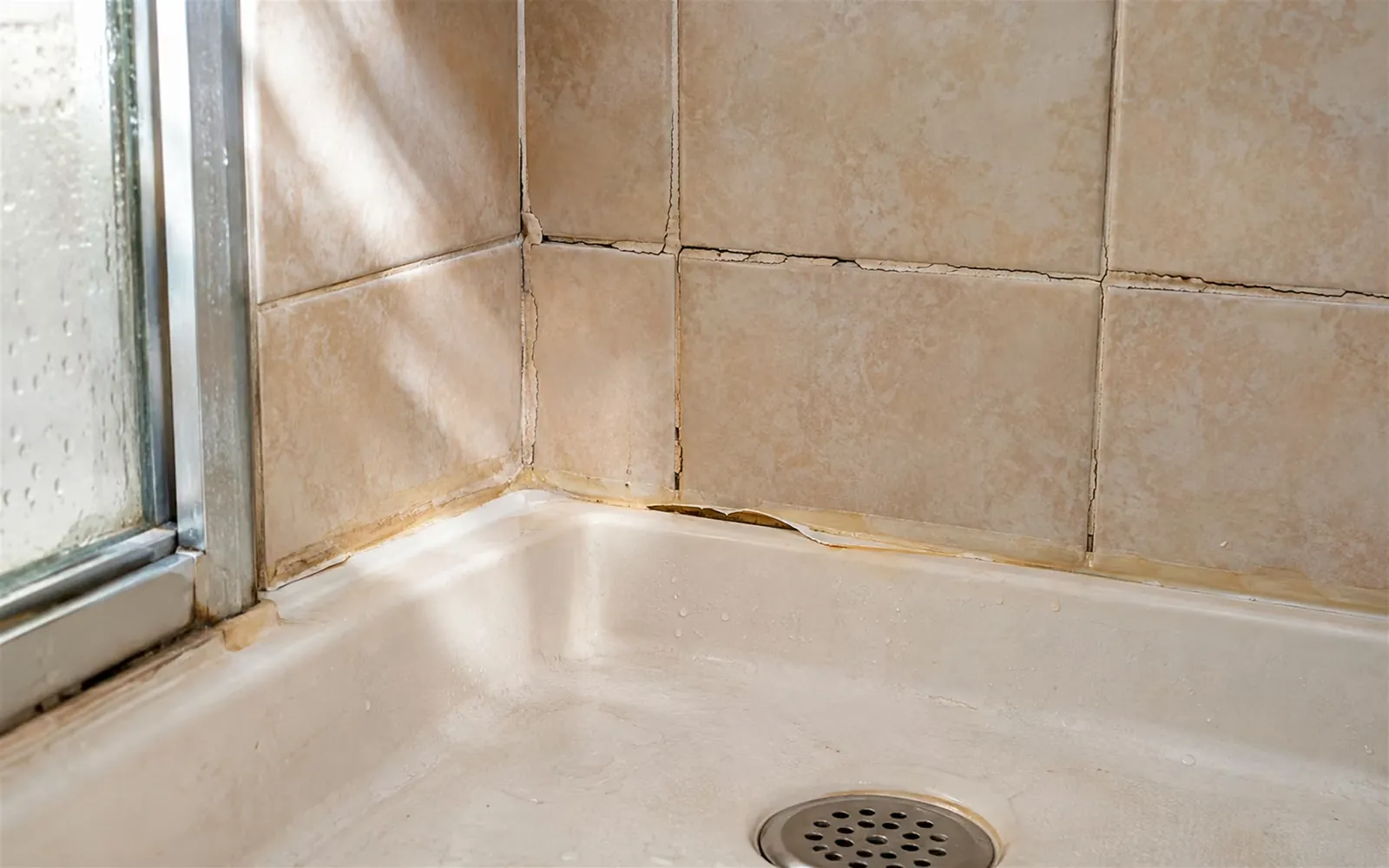
Our read: One bad joint is a repair. The same joints failing again and again, or tile that moves under your thumb, mean the waterproofing needs a look.
Sign 3: Mold keeps coming back
Every Florida bathroom will grow a little mildew if you give it the chance. A light film on the caulk line that wipes off with cleaner is housekeeping. What matters is where it grows and how fast it returns.
Mold that comes back to the same place soon after cleaning means that spot is staying wet. Look for it on painted walls above the shower, in ceiling corners, behind the toilet and along the bottom of the vanity cabinet. Open the vanity doors and smell inside. A musty odor that does not fade after airing the cabinet out is one of the most reliable signs of a hidden leak we know.
The EPA's guide to mold, moisture and your home makes the key point plainly: if you clean up mold but do not fix the water problem, it will most likely come back. The same guide suggests keeping indoor humidity below 60 percent, ideally between 30 and 50 percent, and says most patches smaller than about 10 square feet can be handled by a homeowner. A larger area, or mold you suspect is inside a wall, deserves a professional look.
A cheap humidity meter from a hardware store takes the guesswork out of this. Leave one in the bathroom for a few days. If the reading stays high long after showers end, the room is not drying out, and paint or tile will not solve that on their own.
Our read: Surface mildew is a cleaning and ventilation issue. Mold returning to the same spot, or a musty vanity, means finding the moisture source comes before anything else. If we find more than a small area during demolition, we stop, show you and talk through the options, including a remediation specialist when it is warranted.
Sign 4: Peeling paint, bubbling walls and a fan that does nothing
Paint in a bathroom should not peel. When it does, moisture is getting underneath, either from the room or from behind the wall. Bubbles near the shower usually mean the drywall has absorbed water. Press gently on the area. Sound drywall does not give. If it feels soft, or the paper face wrinkles under your finger, that section is already damaged.
Then test your exhaust fan. Turn it on and hold a single square of toilet paper up to the grille. If the fan cannot hold the paper in place, it is not moving enough air. Next, find out where the fan actually goes. Plenty of older fans vent into the attic, or through ductwork that has come apart, which simply moves wet air into a space where it can damage insulation and framing.
A ventilation fix is one of the more satisfying repairs in a home. A stronger, quieter fan, vented outside and wired to a timer so it keeps running after each shower, can stop this sign cold if the walls are not already damaged. If you find soft drywall, stained framing, or paint that fails again right after a fresh coat of primer, you are looking at more than a fan.
Our read: A new fan and fresh paint will do if the walls are firm. Soft drywall near a shower means opening the wall, and usually taking a hard look at the shower itself.
Sign 5: Stains, drips or damp spots outside the bathroom
Some of the best clues are not in the bathroom at all. Look at whatever shares a wall with it or sits underneath it.
- The ceiling below a second-floor bathroom. Yellow or brown rings, sagging or bubbling paint are all worth tracing back upstairs.
- The other side of the shower wall. Swollen baseboards, peeling paint and warped flooring usually line up with the shower or the valve.
- Closets that back onto the bathroom. A musty smell, or clothes that feel slightly damp, can point to a slow leak in the shared wall.
- Your water bill. A steady rise with no change in habits can mean water is going somewhere you cannot see.
Stains like these can come from a leaking drain, a failed shower pan or a loose supply line. An experienced crew can often narrow it down by running one fixture at a time and watching what changes. If a loose connection is to blame, the fix is quick. If a tiled shower with a failed pan is to blame, there is no lasting way to repair it from above. It has to come apart.
Ground-floor homes have one extra thing to watch for. A warm spot on the floor, wet baseboards with no visible source, or the sound of running water when everything is off can point to a leak under the slab. That is a job for a licensed plumber with leak detection equipment, and it should come before any other work in the room.
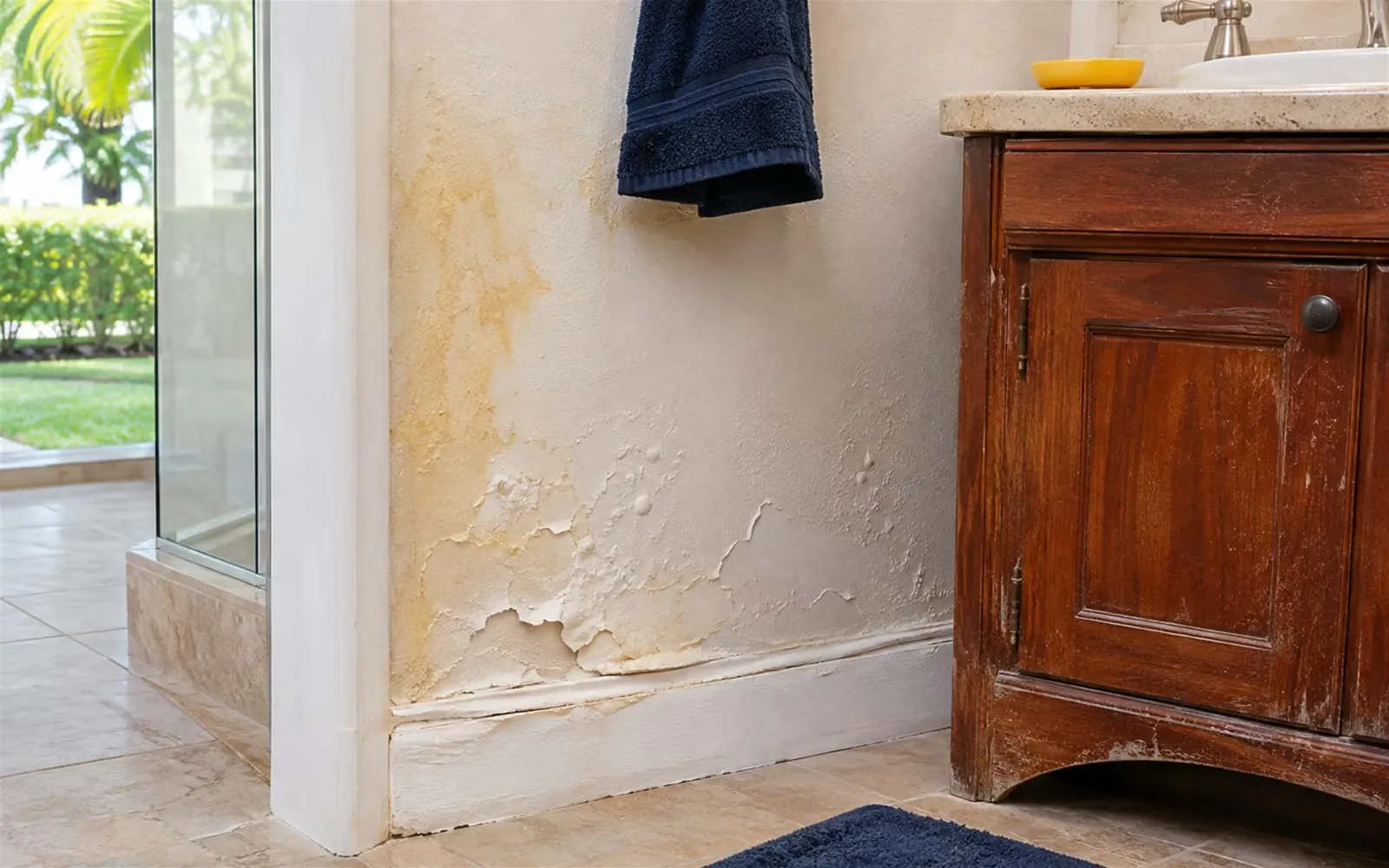
Our read: A loose supply line or drain connection is a plumbing repair. A failed shower pan or repeated staining means the shower has to be rebuilt, and that is when many homeowners choose to remodel the whole room.
Sign 6: Fixtures and plumbing are showing their age
Look at the metal. Corroded shutoff valves, green or white crust around faucet bases, shower heads that spray in every direction and handles that take real force to turn are all normal results of hard water and time.
One worn faucet is a quick replacement. We only call this a sign when the problems show up everywhere at once: low pressure at several fixtures, valves that will not fully shut off, toilets that run, drains that are always slow. If the shower valve itself is failing and it sits behind a tiled wall, replacing it can mean opening the tile anyway. That is the natural moment to ask whether the rest of the shower is worth keeping.
The age of the home matters too. If your house was built between the late 1970s and the mid 1990s, look for gray polybutylene supply lines, a material with a poor track record that many insurers ask about. Homes from before the mid 1970s may have cast iron drains, which can corrode from the inside. You do not have to replace either one because of a blog post, but a remodel with the walls open is the most convenient time you will ever have to deal with them.
Our read: Single parts are repairs. Failing valves behind tile, or old supply lines throughout, tilt the decision toward opening the room up.
Sign 7: The layout no longer fits your life
Not every reason to remodel involves damage. Sometimes the room just does not work. A tub nobody has used in ten years. One sink for two people getting ready at the same time. A door that hits the vanity. No place for towels. A tall step into the tub that is getting harder for an aging parent.
These are good reasons to remodel, because no repair will ever fix them. The changes we are asked for most often include:
- Tub-to-shower conversions. A dated tub comes out and a walk-in shower goes in, properly sloped, drained and waterproofed. Most conversions take 1 to 2 weeks.
- A double vanity or a better layout. Reworking the footprint can make room for a second sink or a larger shower without wasting space.
- Easier access. A low-threshold shower entry, with solid backing in the walls so grab bars can go in now or later, makes the room easier to use for years to come.
- Storage and light. Built-in niches, shelving and better vanity lighting change how a small room feels every single day.
One caution on resale: if this is the only tub in the house, think it through before you remove it. Many real estate agents suggest keeping at least one tub in a home, because families with small children often look for one. In a house with two or more bathrooms, converting the primary tub is usually an easy decision.
Sign 8: Repairs are stacking up, or you are getting ready to sell
Add up the small fixes. New caulk this spring, a new faucet last year, paint over the same stain, a replacement vanity door. When you are spending money on the same room every year and it still does not feel right, piecemeal repairs may no longer be the sensible path. Doing the work together also tends to be more efficient, because the crew is already there, the walls are already open and the trades follow one schedule.
Look too for dated features that a repair will never change: almond or colored tubs, cultured marble tops with built-in sinks, popcorn ceilings and builder-grade mirrors. Buyers notice bathrooms. If you plan to sell in the next few years, a clean, neutral update usually does more than an elaborate one. Ask a local agent which rooms matter most in your neighborhood before you spend.
Our read: If the room is sound, a refresh may be all you need. If you are on your third repair in the same corner, get a written estimate for the bigger job and compare before you buy another tube of anything.
Repair, refresh or full remodel: how to decide
Here is how we usually think about it at a first visit. It is a starting point, not a diagnosis, because the same symptom can have different causes in different homes.
| What you are seeing | Likely next step | Why |
|---|---|---|
| One cracked grout line or a failed caulk joint | Repair | Surface wear. Rake out, regrout or recaulk, and keep an eye on it. |
| Worn faucet, running toilet or weak exhaust fan | Repair | Replace the part. Nothing else needs to be touched. |
| Hollow tile in one corner over a slab | Repair | Reset the loose tile if the surrounding floor is sound. |
| Mildew that returns, but walls are firm | Repair plus ventilation | A new fan vented outside, then watch whether it comes back. |
| Dated vanity, lighting and paint, with solid tile | Refresh | A new look in 2 to 4 days without opening the shower. |
| Soft drywall, or tile that moves in the shower | Rebuild the shower | The waterproofing has failed, and new tile will not fix that. |
| Stains below or beside a tiled shower | Rebuild the shower | A failed pan cannot be repaired from above in any lasting way. |
| Soft subfloor on a second floor | Full remodel | The floor has to come up, and fixtures come out with it. |
| A tub nobody uses, or a layout that does not work | Conversion or full remodel | No repair changes the footprint of a room. |
Our rule of thumb is simple. One isolated sign usually means a repair. Two or more water signs in the same room mean you should open things up and inspect before you spend money on finishes. And nobody should ever tile over a problem, because new tile on top of failed waterproofing only hides it for a while and makes the eventual tear-out more expensive.
What is the difference between a refresh and a full remodel?
A refresh keeps the shower, tile and plumbing locations where they are, and changes what you see and touch: the vanity, faucets, mirror, lighting, paint and hardware. It is a good choice when the room is dry and sound but tired. A full remodel takes the room back to the studs where needed, so the waterproofing, drains, valves and ventilation can all be done properly, then rebuilds it, with a new layout if you want one.
What a full bathroom remodel includes
A bathroom is a small room with a long list of trades. Plumbing, waterproofing, tile, ventilation and fixtures all have to come together in the right order. On our bathroom remodeling jobs, the sequence usually looks like this:
- Walkthrough and written scope. We look at the room with you, talk through what is bothering you, and put the plan, timeline and price in writing before anything is touched.
- Demolition and inspection. A clean tear-out with dust control, followed by a check for hidden water damage. If we find rot or wet framing, we show you and price the repair before doing any extra work.
- Plumbing and electrical rough-in. New valves, drains and supply lines go in where they belong, along with wiring for lighting and the exhaust fan. If the scope calls for permits, such as moving plumbing or electrical, this is when inspections usually take place.
- Backer board and waterproofing. Moisture-resistant board goes up, then the pan is built with the correct slope and a waterproofing membrane is applied before any tile goes on.
- Tile. Floors, walls and niches, set flat with even grout lines, plus the cure times that tile and waterproofing need to perform.
- Vanity, fixtures and glass. Vanities, faucets, toilets, mirrors and lighting are installed level, plumb and leak free, with glass or a curtain rod to finish the shower.
- Trim, paint and final walkthrough. Baseboards and door casing finish the room. Then we walk through everything with you before we call the job done.
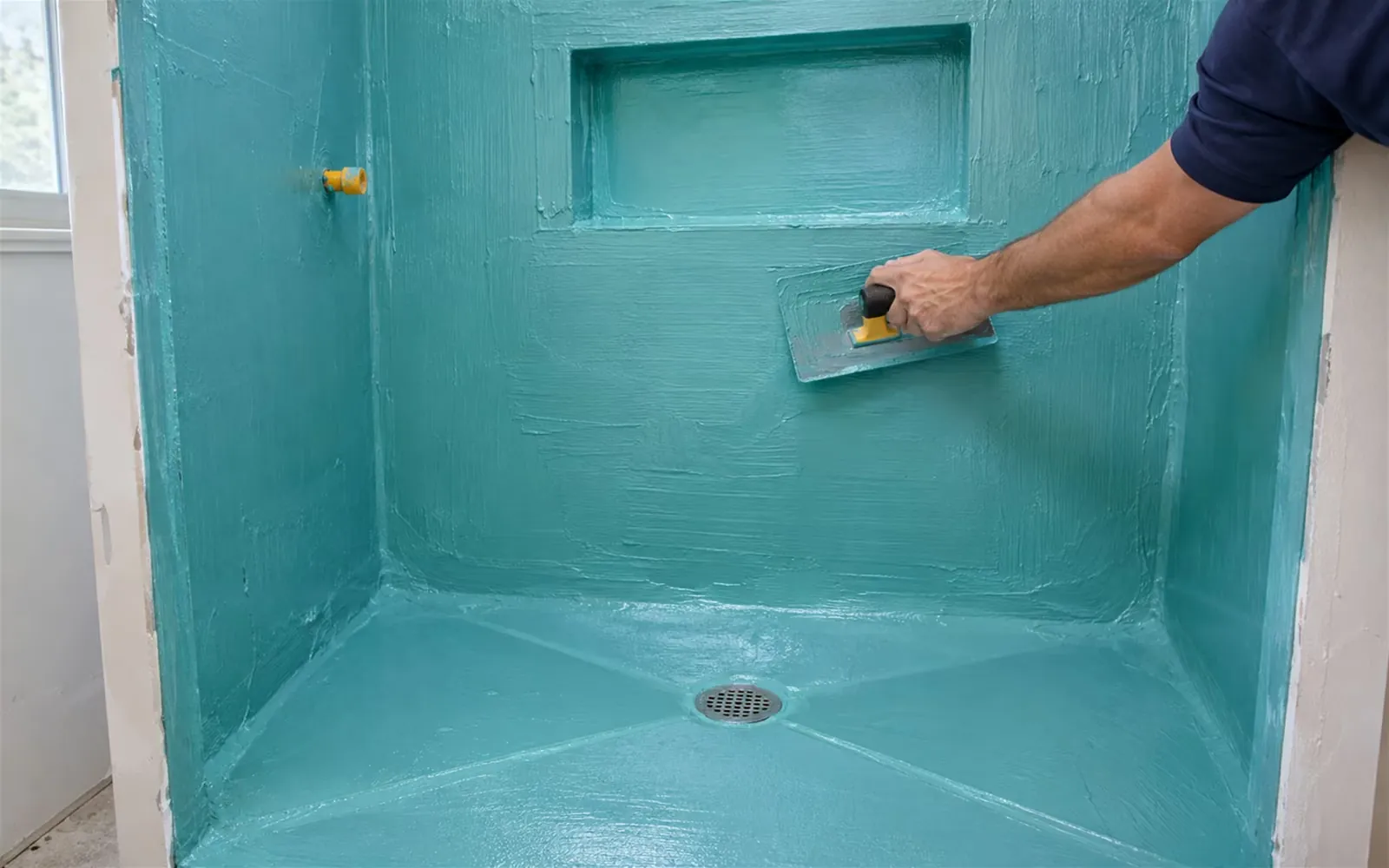
Florida details that keep a new bathroom dry
Tile gets all the attention, but these details decide whether a bathroom still looks good years from now. They are worth asking about no matter who does your work.
- A continuous waterproofing membrane. Every shower we build gets one on the walls and the pan before tile goes on, because tile and grout alone will not keep water out.
- Real slope to the drain. Shower floors need to fall toward the drain, commonly about a quarter inch per foot, so water does not stand on the tile or under it.
- The right board in wet areas. Standard drywall has no place behind a shower. Wet zones need a backer made for the job.
- A fan that vents outside. It should be sized to the room and ducted through the roof or a wall, not into the attic. A timer lets it keep running after you leave.
- Flexible caulk at every change of plane. Corners and tub edges move a little. Caulk handles that, and grout will crack.
- Proof before it gets covered. A good crew has no problem showing you the waterproofing before it disappears behind the tile. Take a photo. You will be glad to have it someday.
How long it takes and how to live through it
Timelines depend on the scope, the materials and what is behind the walls. These are the ranges we usually see.
| Project | Typical time | What drives it |
|---|---|---|
| Refresh (vanity, fixtures, paint) | 2 to 4 days | Availability of the vanity and top you choose. |
| Tub-to-shower conversion | 1 to 2 weeks | Plumbing changes, tile choice and glass. |
| Full remodel | 2 to 3 weeks | Cure times, layout changes and any hidden damage. |
The most common worry we hear is about losing the bathroom. If it is your only one, we keep the toilet working whenever possible and stage the job to minimize downtime. If you have a second bathroom, the plan is easier, but it is still worth talking through morning routines before work starts. We keep the work area clean and contained, and we work around your family's schedule as much as we can.
Build a little patience into the tile stage in particular. Waterproofing, thinset and grout all need time to cure, and rushing them is one of the most common ways a shower fails early. A few quiet days with nobody on site does not always mean the job has stalled. Sometimes it means it is being done right.
What affects the cost of a bathroom remodel
You will not find a price list here, on purpose. Two bathrooms of the same size can turn into very different jobs once you know what is behind the tile, and any number we printed on a blog would be wrong for most of the people reading it. What we can do is explain what moves the price.
- Size and scope. A guest bath refresh and a full primary bath renovation are very different projects.
- Shower or tub work. Tub-to-shower conversions, new shower pans and glass all add plumbing and waterproofing time.
- Tile choice and layout. Large-format, mosaic or floor-to-ceiling tile changes both the material and the labor.
- Hidden damage. If demolition reveals rot or water damage, we show you and price it before any extra work happens.
A few choices help keep the budget under control. Leaving the toilet, drains and vanity where they are avoids the most expensive kind of change. Using a simple tile on the large surfaces and something special in one niche or on one wall gives you the look at a fraction of the labor. And deciding early what truly matters to you, whether that is the shower, the storage or the look, makes it easier to spend in the right place.
After a free visit, you get a written estimate with a clear price, and we never add charges without your approval.
A 10-minute checklist before you call anyone
Grab a flashlight and your phone. Take photos as you go, because they make any conversation with a contractor faster and more useful.
- Walk the whole floor in socks and note any soft or uneven spots.
- Tap floor and shower tile with a screwdriver handle and listen for hollow areas.
- Press on shower tile near any cracked joints to see if anything moves.
- Look inside the vanity with a flashlight, and smell it, for stains, swelling or a musty odor.
- Check the ceiling and wall corners for mold, peeling paint or bubbles.
- Test the fan with a square of toilet paper, and find out where it vents.
- Check the ceiling below and the rooms and closets next door for stains or odors.
- Turn each shutoff valve gently to see whether it still works.
Questions to ask any bathroom contractor
- How will you waterproof the shower, and can I see it before the tile goes on?
- What happens if you find hidden damage after demolition?
- Will I get the scope, timeline and price in writing?
- Who is on site every day, and who do I call with a question?
- Are you licensed and insured, and can I see the documentation?
- Will this job need permits, and who takes care of them?
Any good contractor will be glad you asked. We are an owner-led crew, and we would rather answer these up front than explain something later.
The bottom line
Most bathrooms give you plenty of warning. The trick is telling the signs that are about wear from the signs that are about water. Wear can wait, and it can usually be fixed one piece at a time. Water does not wait, and it gets more expensive the longer it stays hidden.
If you checked the list above and found one small thing, fix it and enjoy your bathroom. If you found two or three, especially around the shower, it is worth having someone open-minded take a look before you pay for another patch. If you would like that to be us, we serve Orlando and 11 nearby Central Florida communities, and the visit is free. If you are planning more than one room, our week by week kitchen remodel timeline shows how a larger project comes together, and our guide to drywall cracks can help you read the walls in the rest of the house.